



Rotational Moulding The Process & Advantages
Overview:
Rotational moulding, also known as rotomoulding, is a plastics moulding technology which is ideal for making hollow articles. It is a casting technic but unlike most other plastics processes there is no pressure involved. Moulds for the process are relatively inexpensive as they do not have to withstand pressure and therefore relatively short production runs can be made very economically.
Rotomoulding is used to make a very diverse range of products. The process offers the product designer exceptional freedom as just about any shape can be produced. There is almost no limit to the size of mouldings and there are literally thousands of applications.
The Process:
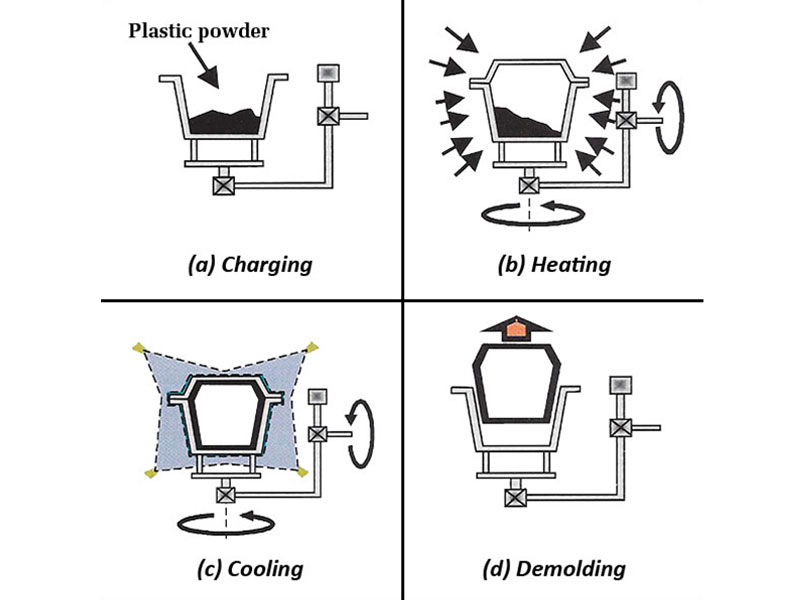
The concept of rotational moulding is very simple. A plastic material, normally in powder form is placed into a hollow mould, usually made from cast aluminium or fabricated from sheet steel. The mould is closed and rotated slowly on two axis. The mould is then heated in an oven whilst rotating and the polymer gradually melts and ‘lays-up’ on the inside of the mould. Once the polymer powder has fully melted the mould is moved to a cooling station and cooled usually with air and sometimes a fine mist of water. As the mould cools the part solidifies. When the material has finally cooled sufficiently to release away from the mould surface the process is stopped and the product is taken out of the mould (de-moulded).