



Materials for Rotational Moulding
Overview:
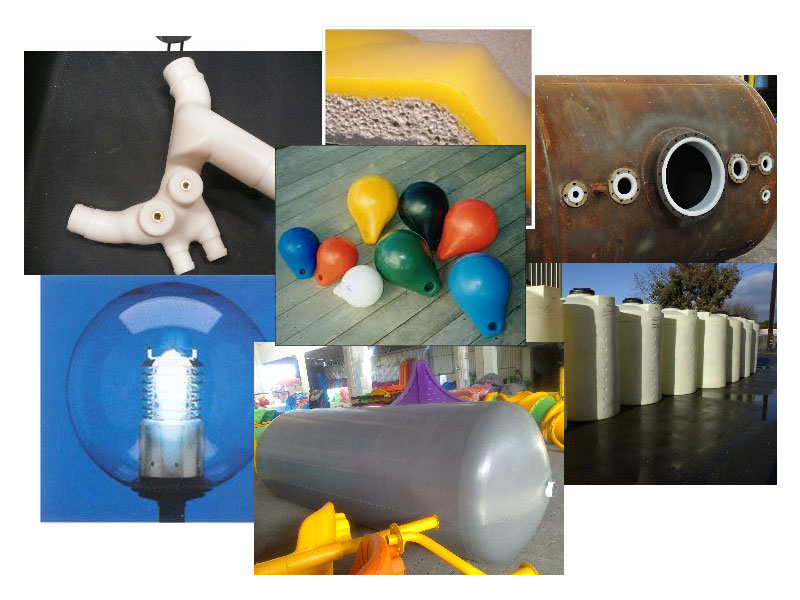
Rotational Moulding (or Molding using the American spelling) is a unique process that is very versatile and is virtually unlimited in the shapes and products that can be produced.
Designers and moulders are pushing the limits and demanding a wider variety of materials to meet more challenging application’s.
As the process requires the material to be subject to much longer heat cycles compared to other processes such as injection and blow moulding, materials for Rotational moulding require an enhanced heat stabilisation additive package to prevent oxidation and break down of the material properties. In addition all Rotational moulding grades supplied should contain a UV stabilisation additive package making them ideal for outdoor as well as indoor applications. Therefore materials available on the general market for other processes should not be used for Rotational moulding.
For these reasons and due to the lower volumes used worldwide for the Rotational moulding process, the materials that are available are limited from the thermoplastic suppliers.
Polyolefin are the largest group of thermoplastics and are often referred to as commodity resins.
These mainly consist of polyethylene and polypropylene grades.
The term polyolefin means “oil like” and refers to the oily or waxy feel that these materials have.
They are very popular, because of the low cost and wide range of applications.
See here for main summary of rotational moulding
Contents:
1 Common Materials in Rotational Moulding
1.1 Polyethylene (PE)
1.11 Linear Low-density polyethylene (LLDPE)
1.12 High Density Polyethylene (HDPE)
1.13 Cross Linked Polyethylene (XLPE)
1.14 Manufacturing of Polyethylene (PE)
2 Other Materials in Rotational Moulding
2.1 Polypropylene (PP)
2.2 Nylon (PA)
2.3 Polycarbonate (PC)
2.4 Plastomer
2.5 Thermoplastic elastomer (TPE)
2.6 Plasticised polyvinyl chloride (PVC)
2.7 Polyvinylidene fluoride (PVDF)
2.8 Roto lining
2.9 Foams